


OUR HISTORY


1920

2026
At age 11, Jerry. H Sauder became fascinated by baby chicks.
By age 22, he turned his fascination into a business.
Over 100 years ago, Sauder Feeds was born.
Four generations later, we are still owned & operated by family.
Quality Feed. Trusted Service. Family Values.
This is our story.


1862
80 acres of tree covered land was purchased by Jerry H. Sauder's grandparents, Daniel & Anna Shenbeck. The Shenbecks spent the next 20 years clearing this land and erecting farm buildings. Their daughter, Lydia, married David Sauder in 1884.
1898
Jerry H. Sauder, found of Sauder Feeds, Inc., was born to David & Lydia Sauder
1909

Describe your image

Describe your image

Describe your image
Describe your image


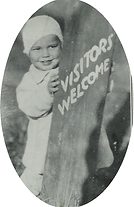


At age 11, in 5th grade, Jerry H. Sauder was fascinated watching baby chicks hatch and was already breeding and producing baby chicks for customers from his parent's farm flock. When disease and pests began to discourage his efforts, he talked his parents into purchasing a 100-egg lamp-heated "Sure Hatch" incubator and placed it in the dining room of their home, the current home of Jerry & Kathy Sauder.
1914
By this time, there were now 4 incubators in the dining room of the Sauder farmhouse that young Jerry H. Sauder was managing at age 16.
1918
Jerry H. Sauder, age 20, purchased:
-
14x30 Hen House, residence type
-
1200 Egg Buckeye Semi Mammoth, oil-heated incubator
-
Hatchery building, which now houses offices & storage
-
10,800 egg hot water heated incubator
1920
Although Jerry H. had been selling baby chicks to local farms for some time, it was not until 1920, at age 22, that he officially recognized his operation as a business venture.
1922-1928
At age 23, Jerry H. Sauder started attending Bluffton College seminary as well as Northwestern University, returning home during hatching seasons.
1929
Jerry H. & Wilma Sauder had their first child, Carlton J. Sauder on April 2, 1929.
1923-1946
Jerry H. served as pastor at Grabill Mennonite Church, mostly as an unpaid minister.
1927
Jerry H. Sauder married Wilma Grabill on Christmas Eve.
By this time, the Sauder Leghorn Farm & Hatchery was shipping chicks all over the Midwest by train and making a good showing at all the local fairs.
1930
Purchased 50 breeder hens & 4 cockerels from the world recognized Tom Barron Poultry Farm in Catforth, England, all with a 200+ egg strain stock. The following year, Jerry H. Sauder purchased the Hatchery building plot from his father for $50.
1932
Because of the large competition in the leghorn market, as well as the loss of sales as a result of the Great Depression, Jerry H. Sauder started marketing a heavy breed of chick to make up for lost sales.

1935
Jerry H Sauder added a feed grinding operation in the east end of the hatchery building to service the customer needs for feed for their layers and broilers and also diversified into many other animal feeds.
The foresight of Jerry H. Sauder to expand into the feed business is what saved the company when eventually in the 1940's the small hatcheries became a thing of the past and the egg business went to larger operations.
1938
First feed mill built with the installation of 200 volt electric power to operate 40 HP Electric Motor
1945
Jerry H. Sauder purchased the feed mill acreage from his father for $1. He purchased the surrounding 80 acres from his father for $16,000.

1955
In 1955, Carlton officially joined his father Jerry H. in the business operation.

1965
Thanksgiving Day, 1965, the Feed Mill burned to the ground. Carlton saved the trucks from the fire which ultimately saved the business.
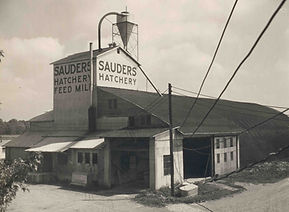
1951
The first feed mill fire took place, with no record of the cause. This led to many mill improvements, consisting of adding 2 mixers, an electric hoist, and a steel core-floor reconstruction.
Carlton Sauder graduated from Bluffton College with a Bachelor of Science degree. He goes on to attend Purdue University enrolled in the poultry and animal husbandry department and marries Joanne Miller in 1952.

1960
Carlton purchased the first semi-tractor and trailer for feed delivery.


1969
Barn fire
1973
Feed prices doubled
1966-1967
Feedmill reconstruction


1975
Jerry I. and Kathy Sauder both join the Sauders Farm, Inc. business operation
1976
Sauders exit the hatchery business after the fire destroyed the hatchery building

1974
The 56 year-old hatchery building is destroyed by fire on January 7, 1974. This structure was rebuilt in 1977.

1978
Jerry I. Sauder invested in a used grain dryer and two used 26,000 bushel grain storage bins which he moved from a downtown Fort Wayne alfalfa company. This addition on the north side of the mill added the convenience for farmers to bring their corn in at harvest to sell or store. Sauder Feeds, Inc. then had this corn available during the year for the manufacture of animal feeds.


1980
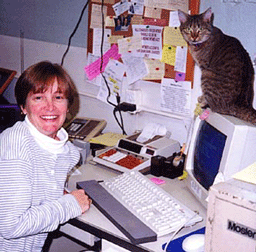
Carlton introduced the first computer to the 60 year old business operation. This early Radio Shack computer was used to do feed formulations.

1984
First accounting software was installed on one computer.
Two bins are added above the driveway at the grain dumping area next to the storage bins north of the mill. This increased our loading and drying flexibility.
1986
Jerry I. Sauder invested in a 96,000 bushel bin (the Big East) which added much more storage capacity for corn harvest.

1993
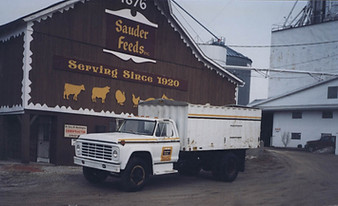
Sauder's Farm, Inc. name was changed to Sauder Feeds, Inc. to better reflect the nature of the current business operation.
1994
New Grain Dryer installed that had automated moisture controls so no one had to stay up all night to monitor the gauges.
A new liquid molasses system was installed.


1996
Purchased an all-inclusive Ag & Grain accounting software package from Summit Software out of Fort Wayne, IN. This allowed grain tickets to now be entered on the computer and all discounts were calculated automatically.
1995
New '95 Mack tractor was purchased.
We celebrated our 75th anniversary with an open house that included animals, a hot air balloon, food, games, and and a 7.5% discount on our products. A lot of people came and enjoyed this hot, humid day celebrating with us!


1999
Our new business, Sauder Trucking Co., was started to handle all the delivery expenses and income. All new trucks are purchased through this company.
We also purchased a 80' x 120' used Butler steel building from Central State to use for corn storage and miscellaneous ingredient storage.
1997
A 3rd Shift (night shift) is added to keep up with production demand originating mostly from the larger duck feed tonnage.


2000
Stored 70,000 bushel of corn in the new Butler Building, which is now called the "North Building"
Sauder Eggs was added to the company structure.
2001
Another good corn harvest - 54,000 bushel stored in the North Building.
Extensive business growth required organizational review and division of leadership among various key employees.
Purchased a duplicator to make all of the feed tags, a new Nortel phone system, a new Dell server, and two new computers.


2002
Added several new employees which brough our employee total up to 32.
2003
Great egg prices in 2003 made for a great production year for Sauder Eggs.
We painted the feedmill and reworked signage on the south side and on the barn.
Installed a textured feed system.

2007
Our feed tonnage reached 30,000 tons for the year.
We added fibre optics underground to increase the reliability and security of our computer systems.
2005
Celebrated our 85th anniversary with a large open house. We did a lot of cleaning, painting, repair, and maintenance on our buildings and property.

2004
First annual Christmas party held at Lone Star restaurant in Ft. Wayne.


2008
2011
Extremely high ingredient and corn prices caused feed prices to soar with corn reaching $7 per bushel.
Corn prices up to $8 per bushel.

2015
Josh Sauder leads the company to a two-year Safe Feed Safe Food certification.
2013
We used 10,000 bushels of corn per week for feed production.
Josh Sauder, 4th generation, officially joins the firm full-time.
2016
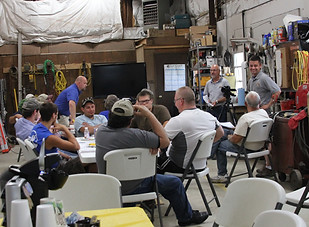
New equipment was purchased and many meetings preparing for the addition of a second pellet mill system with a bin structure. Additional preparations were underway to expand the current truck shop and remodel the office.


2017
The truck shop and office area that was scheduled to be remodeled burned to the ground on January 10 during a wind storm. This resulted in a new, larger truck shop being built later in the year.
A new electronic load out and scale with bin structure was installed to prepare for the new pellet mill system and tower. This became operational by grain harvest.


2020
100 YEARS OF BUSINESS
Sauder Feeds, Inc. was recognized by the Indiana Historical Society's Centennial Business Award, the Journal Gazette, American Feed Industry Association (AFIA), Indiana Senate Governor's Century Business Award, State of Indiana Century Award, and the Congress of the United States.
We planned to host a 100th year celebration, but the COVID-19 pandemic forced us to cancel our plans. In March of 2020 the country shut down due to COVID. A Paycheck Protection Plan was provided by the government to help businesses survive the COVID shut down.
Phase 1 of a feedmill expansion project was completed and loan payments begin in the middle of COVID challenges.
2021
The benefits of Phase 1 of our feedmill expansion project are felt. Our tonnage exceeded the previous year by 11,000 tons, even with the effects of the COVID pandemic.
COVID vaccinations and tests are made available to the public free of charge.

2024
ENTER INFO HERE?
2022
Our new 55,000 bin is completed for harvest to be able to better serve our grain customers.
Corn vomitoxin is an issue that led to all loads of corn require testing.
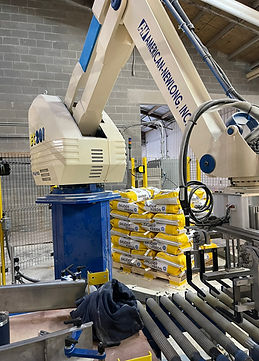
The 2nd Phase of the expansion project is started for a new sacking line with an automated stacker and tender blender.
Record Year Tonnage! 61,846 tons in 2022.
2025
ENTER INFO HERE?
2026
ENTER INFO HERE?